How Fire Suppression Systems Denver Work in Commercial Kitchens, Equipment Areas, and Special Hazards
When people hear "fire suppression," they often picture a sprinkler head overhead and not much else. In real buildings, especially in busy commercial spaces, that picture is too simple. A restaurant kitchen, an electrical equipment room, and a special hazard area do not present the same fire risk, and they should not be protected as if they do.
That is where fire suppression systems Denver property owners rely on start to make sense. The basic goal is always the same: detect a fire condition, respond fast enough to limit spread, support safe evacuation, and protect people, property, and operations. The way that goal is carried out depends on the hazard, the building systems around it, the code path approved for the job, and whether the system continues to be inspected and maintained after installation.
In Denver, that process is not casual. The Fire Code Official, the Fire Marshal, and the Denver Fire Department Fire Prevention Division have authority for code enforcement, inspections, and response to issues such as hazards, disabled life safety systems, and false alarms. For building owners, tenants, and facility managers, that means suppression is not just a piece of hardware. It is part of a larger life safety framework that includes permitting, plan review, testing, monitoring, and ongoing inspection.
Fire suppression is a system, not a single device
A lot of confusion comes from treating suppression as one product. In practice, commercial fire protection Colorado businesses depend on is made up of layers. Some systems detect. Some notify. Some suppress. Some supervise the status of valves, devices, or other components so a problem is caught before an emergency.
That distinction matters because a suppression system may not operate in isolation. A fire event in one protected area can involve a suppression system, a fire alarm system, monitored signals, and related water-based protection working together. NFPA 72 governs fire alarm and signaling functions such as initiation, notification, supervision, inspection, testing, and maintenance. NFPA 25 covers the inspection, testing, and maintenance of water-based fire protection systems.
On a real job, those lines overlap in practical ways. If a protected area has a fire event, somebody needs to know about it. Occupants may need notification. A supervising station may need to receive a signal, which is where fire alarm monitoring Denver becomes part of the conversation. If the building also has a sprinkler system, that water-based system has its own inspection and maintenance obligations. If there is a fire pump supporting that system, fire pump inspection Denver requirements enter the picture too. If there is a backflow assembly on the water supply, backflow inspection Denver matters as part of the broader fire protection setup.
That is why experienced contractors and inspectors tend to talk about coordination rather than isolated equipment. A suppression system that technically exists but has not been properly integrated, accepted, or maintained can create a false sense of security.
Why hazard type drives system design
A kitchen is not an equipment area. An equipment area is not a generic storage room. A special hazard is, by definition, special because ordinary assumptions may not fit.
The first question is always, "What are we trying to protect against?" In a commercial kitchen, the concern is an active cooking environment with heat, fuel, and heavy daily use. In an equipment area, the concern may center on continuity of operations, the nature of the equipment, or the consequences of a small fire becoming a large outage. In a special hazard space, the issue may be that the contents, process, or sensitivity of the area calls for a tailored suppression approach and closer coordination during review and approval.
Even without getting lost in product names, the principle is straightforward. Fire suppression systems Denver facilities use are designed around the hazard they serve. The more specific the hazard, the more important design judgment becomes.
I have seen this become obvious during plan discussions. Two spaces can be the same size and still need very different protection because one is lightly occupied and the other has concentrated risk, expensive equipment, or a process that raises the stakes if suppression is delayed. Square footage alone never tells the whole story.
Commercial kitchens: fast hazards, heavy use, little room for error
Commercial kitchens are among the most unforgiving environments in any building. Heat is constant. Activity is nonstop during service. Equipment is used hard, cleaned under pressure, and sometimes modified over the years as menus or tenants change.
That is why kitchen suppression protection has to work as a practical system, not just as a line item on a permit. A fire in a cooking area can develop quickly. The response has to be immediate and predictable, and it has to fit the real conditions of the kitchen rather than a neat drawing made before full article the space was fully built out.
What matters most in the field is not only whether the system is present, but whether the installed condition still matches the approved condition. If equipment has moved, if appliances have been replaced, or if building work has altered the space, the original protection intent can drift. Owners are sometimes surprised by this. They assume the system that passed once will always be acceptable. That is not how fire safety inspections Denver typically unfold.
Denver states that commercial and institutional properties are inspected annually, generally about every 12 months. During those inspections, officials may review exits, emergency lighting, fire-resistive separations, fire lanes, and test records for fire safety systems. If violations are found, an order notice for correction can follow. In a kitchen setting, records and system condition matter because high-use spaces do not stay static for long.
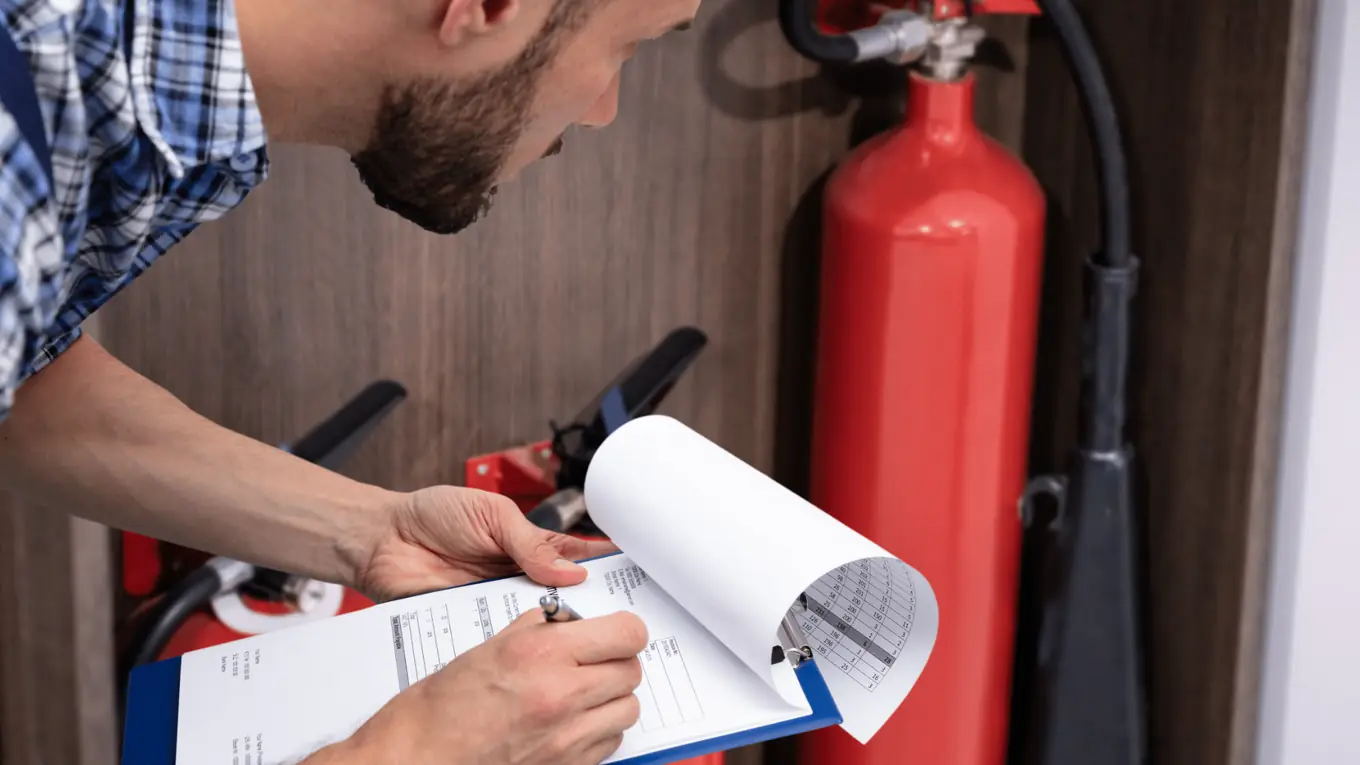
This is where fire extinguisher inspections Denver businesses arrange also fit into the picture. Portable extinguishers are not the same thing as a fixed suppression system, but they are part of the larger protection strategy in an active commercial kitchen. A well-run site does not treat one as a substitute for the other.
Equipment areas: protection tied to continuity and system interaction
Equipment areas can look calm until something goes wrong. They are often controlled environments, but they may contain systems essential to building operations. When a fire starts there, the damage can extend far beyond the room itself. The interruption may affect alarms, communications, building functions, or tenant operations.
The suppression strategy in these spaces often depends on coordinated thinking. Detection and signaling matter because a small incident can become a major service disruption if nobody knows it is happening. Supervision matters because a disabled or impaired protective component may sit unnoticed until the day it is needed. Water-based systems, where used, bring their own inspection and maintenance obligations under NFPA 25.
This is also where fire alarm monitoring Denver becomes more than a checkbox. Monitoring closes the gap between an event inside the room and a response outside it. In occupied buildings, it is easy to assume somebody will smell smoke or notice trouble. In practice, that assumption breaks down quickly after hours, on weekends, or in low-traffic parts of a property.
From an operations standpoint, equipment rooms also reveal the difference between installation and lifecycle management. A building can spend real money on fire sprinkler installation Denver projects or on other suppression work, then undercut the investment by neglecting inspection, test records, and coordination with building alterations. That is rarely intentional. It usually happens because one vendor handles one system, another vendor handles another, and nobody is looking at the whole fire protection picture.
Special hazards require more review, not less
The phrase "special hazard" gets used loosely, but the practical takeaway is simple. If an area falls outside routine assumptions, the design, review, and approval process usually needs more care. That is not red tape for its own sake. It is recognition that unusual risks deserve sharper analysis.
Colorado law requires that fire suppression system installation, modification, alteration, or repair generally cannot begin until required permits are obtained and the job has been registered, with working plans and hydraulic calculations reviewed and approved. That is a crucial point for special hazards, where details matter and field improvisation can create expensive delays.
In Denver, plan review includes fire protection engineering review. The city also states that acceptance or approval is required before final sign-off of fire alarm and fire protection permits. For owners, this means a special hazard space is not the place to rush design assumptions or skip coordination meetings. If the approved plans call for a certain level of protection and the installed work differs, the problem tends to show up at the worst possible moment, during testing, acceptance, or inspection.
Special inspections may also occur outside normal business hours when needed. That can be inconvenient, but it reflects the reality of occupied commercial buildings. Some testing has to happen when normal operations are reduced or when the impact on occupants can be controlled.
Permits, code sets, and the approval path in Denver
One of the most common misunderstandings in fire protection Denver projects is the belief that suppression work can be treated like a small service item. In Denver, permits are required for most construction, alteration, or repair work on private property. Fire protection work often intersects directly with that requirement.
Denver adopted new 2025 Building and Fire Codes effective December 31, 2025, with some projects allowed to use either the 2025 or 2022 code set depending on submittal date. That matters because projects can span design, permit, installation, and inspection phases over many months. If a team does not confirm which code path governs the work, confusion can spread fast. One document references one requirement, another reviewer applies another, and the schedule starts slipping.
That is one reason experienced fire protection teams pay close attention at the front end. The code set, permit status, and review comments shape everything that follows, including acceptance testing and final approval. In everyday terms, the system has to be right on paper, right in the field, and right during testing.
How acceptance testing separates paper compliance from real performance
A suppression system can look perfect on drawings and still fail to satisfy the authority having jurisdiction if the installed performance does not line up. Acceptance testing is where theory meets reality.
Denver notes that acceptance or approval is required before final sign-off of fire alarm and fire protection permits. This is a big moment in any project because it confirms whether devices, controls, related systems, and notifications operate as intended. It is also where coordination issues tend to surface. A signal may not transmit properly. A component may not be labeled or supervised as expected. A sequence may not match the approved intent.
That is why emergency fire protection Denver service calls so often trace back to issues that started earlier, during planning, installation, or post-install modifications. Most failures are not dramatic. They are ordinary oversights that became serious because nobody caught them soon enough.
The strongest projects usually have a disciplined handoff from installation to testing. Records are organized. Drawings match field conditions. Everyone involved knows what is being demonstrated and why. That level of preparation saves time and reduces surprises.
Inspection and maintenance keep protection from drifting out of compliance
The life of a suppression system really starts after the permit is closed. Buildings change. Tenants move equipment. Maintenance staff make practical decisions to keep spaces running. Over time, those decisions can slowly pull a protection system away from its approved condition.
That is where fire safety inspections Denver and NFPA compliance inspections Colorado play such an important role. Annual fire inspections in Denver are not simply a pass or fail visit. They are one of the clearest opportunities to catch drift before it turns into a serious hazard or an enforcement problem.
A typical review may include attention to:
- exits and egress conditions
- emergency lighting
- fire-resistive separations
- fire lanes
- test records for fire safety systems
That last item, records, gets underestimated all the time. People remember the hardware and forget the documentation. But records help demonstrate whether the system has actually been inspected, tested, and maintained. They also help identify recurring problems, disabled components, or overdue service.
For water-based systems, NFPA 25 governs inspection, testing, and maintenance. In practical terms, that means a sprinkler system is not truly protected just because it was installed once. Ongoing care matters. The same logic applies to related fire protection elements, including fire pump inspection Denver and backflow inspection Denver where those components are part of the system arrangement.
The relationship between alarms, supervision, and suppression
Some owners separate alarms from suppression in their minds because different vendors or contracts handle them. In real emergencies, the systems are connected by function even if they are managed separately on paper.
NFPA 72 covers how fire alarm systems should operate, including initiation, notification, supervision, and ongoing care. Those functions matter directly to suppression performance. If a suppression event occurs, someone may need to be alerted immediately. If a system is impaired, that impairment should not remain hidden. If a trouble condition appears, it needs a path to response.
This is why fire system certification Colorado conversations often involve more than one discipline. A suppression system may satisfy one set of expectations, but if the related alarm signaling, supervision, or acceptance path is incomplete, the project is still not where it needs to be.
I have seen property teams focus hard on visible devices and almost ignore supervision and records because they are less tangible. Then an inspection reveals that the true problem is not what is hanging from the ceiling, but what nobody has been checking in the background.
Common trouble spots owners and managers should watch
Most suppression problems do not begin as major failures. They begin as small operational habits that accumulate. Equipment gets moved. Access gets blocked. Test paperwork goes missing. A repair is made without full permit awareness. A contractor solves one issue and unintentionally affects another part of the fire protection setup.
A smart building team keeps asking a few practical questions:
- Has the protected hazard changed since the system was approved?
- Do our records clearly show current inspection and testing status?
- Are we coordinating alarm, suppression, and water-based system responsibilities?
- If a permit is needed, has that process been confirmed before work starts?
- Do we know which code set applies to this project in Denver?
Those questions are not glamorous, but they prevent expensive mistakes. They also support smoother fire safety inspections Denver and stronger long-term reliability.
What good fire protection feels like on a well-run property
On the best properties, fire protection is almost invisible because it is consistently managed. The kitchen protection matches the actual cooking setup. The equipment rooms are not treated as forgotten corners. Special hazard spaces get the extra review they deserve. Monitoring is active. Records are organized. Annual inspections are not a scramble.
That kind of discipline usually comes from owners and managers who understand that fire suppression systems Denver buildings depend on are part of operations, not just compliance. They budget for inspections. They keep permit requirements in view. They take deficiencies seriously before they become enforcement issues. They recognize that commercial fire protection Colorado facilities need is a living system, shaped by use, maintenance, and change over time.
When that mindset is in place, the building is in a much better position, whether the concern is a kitchen hazard, a sensitive equipment area, or a special hazard that requires closer review. The goal is not merely to pass an inspection. The goal is to have protection that works when conditions are bad, decisions are urgent, and there is no time left to wish the system had been handled more carefully.
That is the real measure of fire protection Denver property owners should expect: a system that fits the hazard, follows the approval path, holds up under inspection, and remains ready long after installation day is over.